

Simon Willison created Datasette and the LLM command-line tool and writes detailed notes about applying new AI models in real software. His feed mixes hands-on experiments, release analysis, open-source work, and observations about how AI products behave.This is the strongest account in the set for combining technical depth, frequent original analysis, and practical examples. Follow it for informed experimentation rather than generic launch summaries.Popular AI postsCognitive debt from unreviewed AI-generated codeWhy AI is unpopular outside the technology industry
Updated July 15, 2026
Bluesky has developed an active cluster of AI researchers, independent engineers, policy experts, and research institutes.
The best accounts are useful for original arguments, technical context, and discussions that often do not appear on company channels.
Best AI Bluesky Accounts
 Simon Willison48.2K followersPractical AI engineering experiments
 Emily M. Bender41.8K followersLanguage models and AI criticism
 Ethan Mollick35.7K followersAI at work and education
 Timnit Gebru34.4K followersAI accountability and industry power
 Melanie Mitchell25.9K followersAI capabilities and evaluation
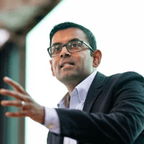 Arvind Narayanan23.5K followersAI evidence and social impact
 Margaret Mitchell23.5K followersResponsible AI and model evaluation
 Yuan Tang16K followersAI systems and open-source infrastructure
 Mark Riedl15.8K followersAI research and deployment commentary
 Nathan Lambert14.2K followersOpen models and training research
 Deb Raji10.6K followersAI audits and accountability research
 AI Now Institute10.6K followersAI policy and public interest
 Rodney Brooks8.8K followersRobotics, AI limits, and hype
 Yoshua Bengio8.8K followersFrontier AI safety research
 Thomas Dietterich8.2K followersReliable and robust AI systems
 Anna Rogers7.9K followersLanguage models and multilingual AI
 Felix M. Simon7.7K followersAI, news, and information access
 Ai24.7K followersOpen models and research releases
Emily M. Bender is a University of Washington computational linguist and co-author of The AI Con. Her feed challenges vague AI terminology, unsupported capability claims, synthetic information, and the labor and power structures around language models.This account supplies an important critical perspective that a product-centered feed would miss. The point of view is explicit, but the posts regularly connect that position to research, language, and institutional evidence.Popular AI postsA simple way to avoid fake academic referencesAI transcription in emergency services
Ethan Mollick is a Wharton professor who studies how AI changes work, education, and entrepreneurship. His feed is a rapid stream of research findings, product experiments, and observations from using frontier models.The account is broadly useful and unusually active, especially for readers who want to understand what new systems can do in real settings. Its publishing volume is high, but the practical examples usually provide more substance than a typical news feed.Popular AI postsHow AI breaks systems built around human effortHow AI homework assistance can undermine learning
Timnit Gebru founded the Distributed AI Research Institute and is a leading critic of concentrated power in the AI industry. Her feed connects AI products and safety narratives to labor, environmental costs, institutional incentives, and affected communities.The account offers an authoritative perspective that is substantially different from both product commentary and frontier-risk coverage. The tone is forceful, but the underlying concerns are central to understanding how AI systems are funded and deployed.Popular AI postsHow effective altruism shapes the AI debateWhy superintelligence framing hides present harms
Melanie Mitchell studies artificial intelligence, cognitive science, and complex systems at the Santa Fe Institute. Her feed highlights measured work on reasoning and evaluation while questioning simplistic claims about intelligence and scientific automation.This is a focused, evidence-oriented account that helps separate interesting capability results from broad conclusions. It posts less often than the fastest feeds, but the signal is consistently high.Popular AI postsWhy scientific inefficiency can produce discoveryAI and the problem of jagged intelligence
Arvind Narayanan is a Princeton professor and co-author of AI Snake Oil. His account posts selectively about how AI claims are evaluated, how capability narratives influence institutions, and how technology affects society.The account is not a high-volume news source, but its individual posts are unusually substantive. Follow it for careful arguments and evidence rather than a comprehensive stream of releases.Popular AI postsAn ICML keynote on adapting to increasing AI capabilitiesWhy AI narratives need to be challenged
Margaret Mitchell has worked on responsible AI at Google, Microsoft, and Hugging Face. Her feed combines evaluation and ethics research with commentary on anthropomorphic language, corporate claims, and socially useful applications of machine learning.This is a credible and analytically distinct feed that connects technical choices with their social consequences. The cadence is modest, but the posts consistently point to useful research or concrete failures.Popular AI postsKPMG case studies that turned out to be AI hallucinationsWhy AI is not a stochastic parrot
Yuan Tang is a senior principal software engineer at Red Hat AI and a maintainer across KServe, Kubeflow, XGBoost, and other open-source projects. His feed focuses on the architecture and operating choices behind production AI infrastructure.This account fills a concrete infrastructure niche that most research and product feeds ignore. It is especially useful for engineers working on inference and serving rather than readers looking for broad AI news.Popular AI postsAdvanced deployment patterns for distributed AI inferenceWhy teams over-engineer inference stacks too early
Mark Riedl directs Georgia Tech’s Machine Learning Center and researches AI for storytelling, games, explainability, and safety. His feed combines research observations, industry criticism, and commentary on unusual real-world applications of AI.The account is highly active without becoming a generic release feed. It is particularly useful for readers who value research context, humor, and attention to how AI systems are actually deployed.Popular AI postsHow AI coding assistance affected skill masteryarXiv’s policy for papers using LLMs
Nathan Lambert writes Interconnects and previously worked on open-model research at Ai2 and Hugging Face. His feed connects technical model releases with the training decisions, organizations, and policy pressures behind them.This is one of the best technical feeds for understanding open models rather than merely tracking benchmark positions. The account is especially valuable when a release needs industry and research context.Popular AI postsWhat GLM 5.2 says about the open-closed model gapGemma adopts the Apache 2.0 open-source license
Deb Raji researches practical AI accountability, audits, and evaluation while completing a computer science PhD at UC Berkeley. Her feed is selective and focuses on the assumptions behind intelligence claims and the regulatory history of AI products.The account has a valuable niche and strong credibility, but original posting is infrequent. Include it for the quality and perspective of individual posts rather than for comprehensive coverage.Popular AI postsHow AGI language enters policy discussionsThe incoherence behind general-intelligence claims
AI Now produces policy research about the institutions and economic interests shaping artificial intelligence. Its feed shares original reports, data-center policy tools, labor research, and events for organizers and policymakers.This is the strongest organization account in the set for policy and political-economy analysis. Some posts promote trainings and events, but the underlying research gives the feed a clear purpose.Popular AI postsThe North Star AI data-center policy toolkitReframing sovereignty, democratization, and accountability in AI
Rodney Brooks is a longtime robotics researcher, former MIT professor, and co-founder of iRobot and Rethink Robotics. His feed tests robotics and AI announcements against engineering constraints and the industry’s history of overpromising.The account offers a distinctive skeptical perspective grounded in decades of building autonomous systems. It is a useful counterweight to feeds that infer broad capabilities from demos or press releases.Popular AI postsTesla’s self-driving promises and hardware limitsCommercial results for learning-based robotics
Yoshua Bengio works on safe AI development through the University of Montreal, Mila, and LawZero. His feed shares safety research, governance arguments, and public interventions about the long-term direction of advanced AI.The account combines exceptional research authority with a clearly defined safety focus. It is not a general machine-learning feed, but it is a primary account for understanding one influential position in the frontier-risk debate.Popular AI postsThe International AI Safety Report 2026How visible incentives can undermine agent safety
Thomas Dietterich is a distinguished professor emeritus at Oregon State University and a former president of AAAI. His feed examines how AI experiments are designed, what current architectures cannot do reliably, and which research directions deserve more attention.The account is a strong source of substantive senior-researcher commentary with little generic news. Its modest cadence makes it better for considered arguments than daily updates.Popular AI postsThe rise of I-did-this-experiment LLM papersLayering symbolic systems on top of LLMs
Anna Rogers is an associate professor at IT University of Copenhagen and co-editor-in-chief of ACL Rolling Review. Her feed shares research context about NLP methods, evaluation systems, data incentives, and the use of AI in academic work.This is a focused specialist feed for readers who want research practice and evaluation rather than launch commentary. The posts often point directly to papers and explain why the work matters.Popular AI postsA human-centric framework for LLM data attributionWhy LLMs do not follow the bitter lesson
Felix M. Simon researches AI, information, and news at the Reuters Institute and Oxford Internet Institute. His feed examines how media covers AI, how AI intermediates access to information, and what audiences think about these changes.This account adds a distinctive media and democracy angle that is absent from most technical feeds. The cadence is modest, but the coverage is focused and consistently original.Popular AI postsHow AI centralizes information through large platformsWhat AI-in-news debates leave out
Ai2 develops open models, scientific applications, datasets, and evaluation tools. Its feed is a frequent first-party source for research releases, technical threads, and the infrastructure behind open AI work.This is the strongest organization feed for concrete research updates. It should be read as a first-party source, but its posts usually provide enough technical detail to be useful beyond company announcements.Popular AI postsEMO and emergent modular structure in mixture-of-experts modelsAi2 Open Coding Agents and SERA
How to choose
Start with a small mix rather than following every account. One technical feed, one critical or policy perspective, and one first-party research organization will produce a more useful timeline than several accounts covering the same launches. Posting frequency varies substantially. High-volume accounts are useful for staying current but require more filtering, while selective researchers may publish only a few original posts each month.Other Bluesky Accounts to Consider
 Tim Kellogg: A very high-volume stream of model, agent, coding, and research commentary; useful if you are comfortable filtering aggressively.
 Distributed AI Research Institute: Institutional AI-accountability research and public discussions, with some overlap with Timnit Gebru’s account.
 Ada Lovelace Institute: UK and European AI governance, regulation, and public-interest research.
 MLCommons: AI benchmarks, system performance, safety programs, and engineering standards.
 Mila: Academic deep-learning papers, researchers, conferences, and the Canadian AI ecosystem.
 404 Media: Investigative reporting on AI labor, surveillance, synthetic media, and platforms within a broader technology feed.
 Rest of World: Distinctive reporting on global AI adoption, labor, language, and infrastructure within a broader technology feed.
 MIT Technology Review: Accessible AI research, policy, and impact reporting within a wider science and technology feed.